
The African Continental Free Trade Area (AfCFTA) represents a significant milestone in Africa’s economic integration, positioning the continent as a formidable player in the global market. Launched in 2021, the AfCFTA aims to create a single market for goods and services, encompassing 54 of the 55 African Union (AU) member states. This ambitious initiative is expected to reshape trade dynamics within the continent, reduce dependency on external markets, and accelerate economic growth.
Impact on Trade and Investment in Africa
The AfCFTA is poised to revolutionize trade across Africa by significantly reducing tariffs and non-tariff barriers, which have historically hindered intra-African trade. By removing these obstacles, the agreement is expected to increase trade between African nations by over 50% by 2030, according to the African Union. This surge in trade will not only diversify economies but also stimulate industrialization, innovation, and job creation.
Moreover, the AfCFTA is expected to attract increased foreign direct investment (FDI). Investors are likely to view Africa as a more attractive market due to the enhanced ease of doing business, the potential for larger economies of scale, and the promise of a more integrated and stable economic environment. The World Bank projects that the AfCFTA could lift 30 million people out of extreme poverty by 2035, underscoring its potential as a transformative force for development.
Economic Growth and Development
The AfCFTA is not just about boosting trade; it’s about creating a unified market that fosters economic resilience and sustainability. The agreement is expected to lead to the creation of more competitive industries, driving innovation and improving the quality of goods and services produced within the continent. By integrating regional markets, African countries can leverage their comparative advantages, resulting in more efficient production and supply chains.
In addition, the reduction of trade barriers will likely lead to lower consumer prices, increased access to a variety of goods and services, and improved living standards for millions of Africans. The ripple effects of these changes could be profound, contributing to the overall economic development of the continent and reducing the dependency on aid and external debt.
- The AU has emphasized that the AfCFTA will “unlock Africa’s economic potential, creating a unified market of 1.3 billion people with a combined GDP of over $3.4 trillion.” This monumental effort is expected to “enhance competitiveness at the industry and enterprise level through exploiting opportunities for scale production, continental market access, and better reallocation of resources.”
- According to a report by the World Bank, “The AfCFTA presents a major opportunity for African countries to boost growth, reduce poverty, and broaden economic inclusion. The agreement could lead to a $450 billion increase in Africa’s GDP by 2035, with gains in the manufacturing, services, and agriculture sectors.”
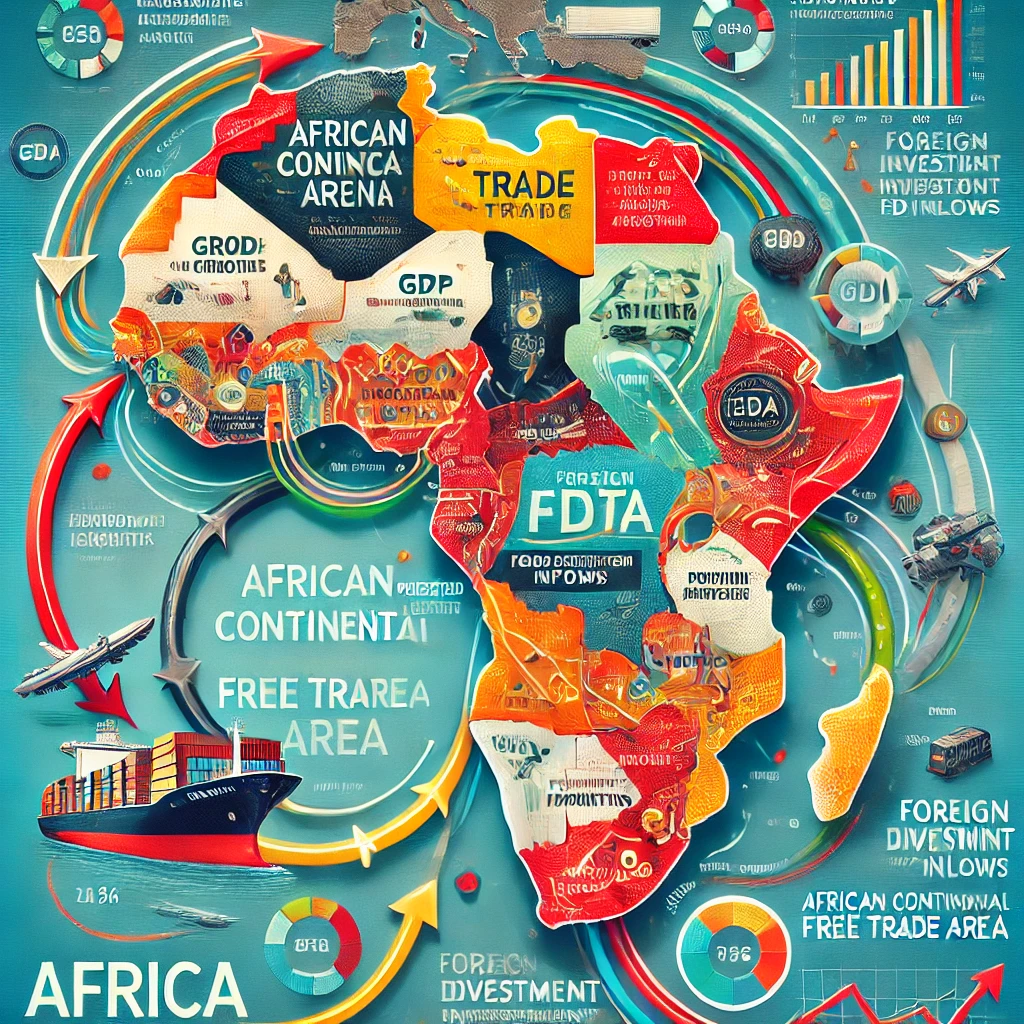
The African Continental Free Trade Area is more than just a trade agreement; it is a bold step towards realizing the economic aspirations of the continent. By facilitating trade and investment, the AfCFTA has the potential to transform Africa into a global economic powerhouse, fostering inclusive growth and development. As the agreement continues to be implemented, it will be crucial for African nations to collaborate closely, ensuring that the benefits of this historic initiative are shared by all.
Relevant Links
You can read further about the AfCFTA using the following links